Urologist · Monterrey, Mexico
Your Monterrey based urologist specializing in men's health and fertility.
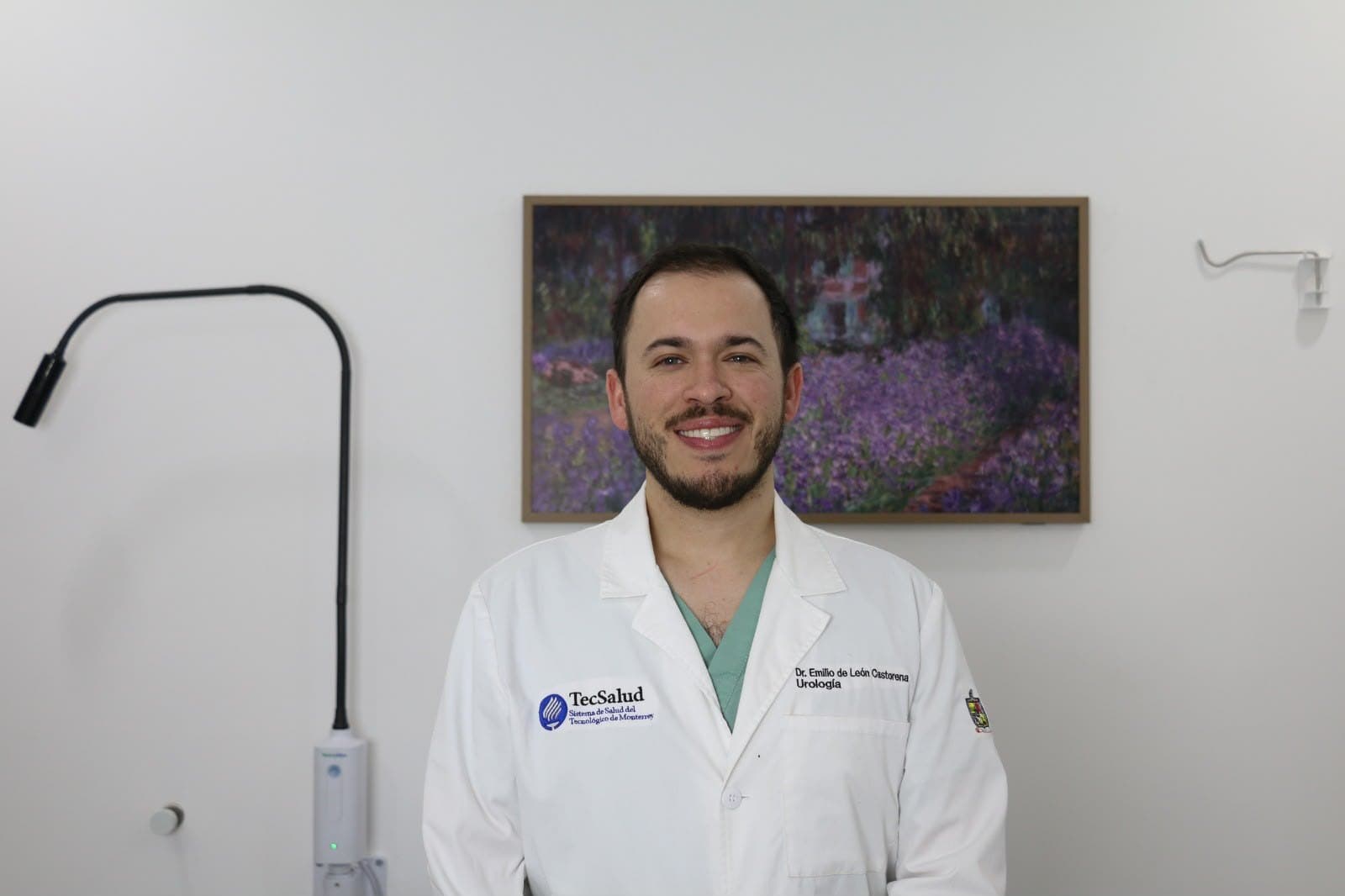
Urologist · Monterrey, Mexico
Dr. Emilio De León Castorena
Dr. Emilio De León is a board-certified urologist specializing in male infertility, microsurgical reproductive urology, sexual medicine, men's health, and minimally invasive surgical therapies (MIST) for benign prostatic hyperplasia (BPH).
After completing his urology residency at Tecnológico de Monterrey, he received advanced training in Andrology, Male Infertility, and Sexual Medicine at the Desai Sethi Urology Institute, University of Miami.
His practice focuses on male infertility, varicocele, testosterone deficiency, erectile dysfunction, BPH, and advanced microsurgical and minimally invasive treatments. He is the only urologist in Mexico currently performing microsurgical varicocelectomy with intraoperative 20-MHz MicroDoppler ultrasound, enhancing arterial identification and preservation during surgery.
Dr. De León also performs Rezūm™, UroLift®, and Optilume® for BPH. Having performed more than 100 Rezūm procedures, he is among the most experienced Rezūm surgeons in Northeastern Mexico.
He is committed to delivering personalized, evidence-based care using the latest technology to optimize outcomes and improve patients' quality of life.
Services
Through a detailed evaluation, an accurate diagnosis, and a personalized treatment plan, Dr. De León addresses a wide range of men's health concerns, from surgical procedures to minimally invasive therapies tailored to you.
Men's Health Check-Up+
A comprehensive men's health evaluation: prostate, testosterone, sexual function, and fertility, with testing and personalized guidance.
More infoMale Fertility+
Workup and treatment of male infertility, from semen analysis and hormone profile to medical and surgical treatments.
More infoMicrosurgical Varicocele Repair with Intraoperative MicroDoppler+
Microsurgical varicocelectomy with intraoperative 20-MHz MicroDoppler ultrasound to identify and preserve the testicular artery.
More infoMIST Therapies · Rezūm™ Water Vapor Therapy+
Minimally invasive water vapor therapy for an enlarged prostate (BPH) that preserves sexual and ejaculatory function.
More infoTestosterone Replacement Therapy (TRT)+
Diagnosis and management of testosterone deficiency.
More infoVasectomy Reversal+
A microsurgical procedure to reestablish sperm flow and achieve natural conception.
More infoSperm Retrieval (MicroTESE)+
Surgical sperm retrieval under a microscope for cases of azoospermia, maximizing the chances of success with assisted reproduction.
More infoSpermatic Cord Denervation+
Microsurgical treatment for chronic testicular pain (orchialgia) that hasn't responded to conservative care.
More infoBook an appointment with Dr. De León
Do you have questions? Do you think you may be experiencing issues related to male infertility? Schedule an appointment today for a professional and judgment-free evaluation.
Offices
Calz. Mauricio Fernández Garza 325
Col. Del Valle, 66220
San Pedro Garza García, N.L.
View on map →Christus Muguerza Hospital San Nicolás
Av. Rómulo Garza 1100
Hacienda los Morales 3er Sector, 66495
San Nicolás de los Garza, N.L.
View on map →Intermedical Centro Médico Especializado
Calle Quinta 211, entre Herrera e Iturbide
Zona Centro, C.P. 87300
Matamoros, Tamps.
View on map →
Book via WhatsApp
It's the fastest way to book your appointment. Message us and we'll reply personally.
Message us on WhatsApp+1 956 908 3958